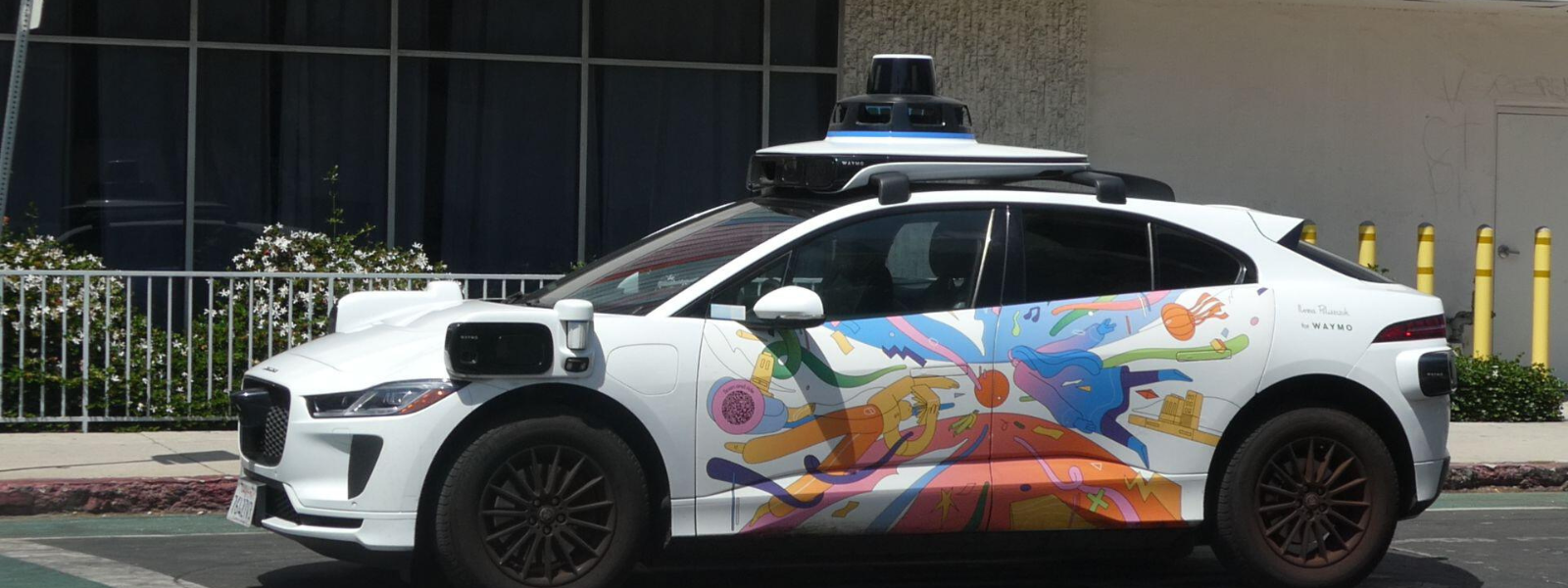
Waymo’s robotaxis have now completed more than 20 million paid rides — and over the same distance, they caused 92% fewer pedestrian injuries than human drivers; the company is now targeting 1 million rides every single week by year-end 2026
In late December 2025, Waymo’s fleet of driverless robotaxis quietly passed a specific milestone that no autonomous vehicle company had ever reached.
The Alphabet subsidiary’s cars completed their 20 millionth paid ride — carrying real passengers in real traffic, without a human behind the wheel, in five American cities. The company logged that milestone after 220 million rider-only miles, roughly the equivalent of 250 human lifetimes of driving.
Alongside those numbers came another claim: that Waymo’s cars were involved in 92% fewer crashes causing pedestrian injuries than human drivers would have been over the same distance.
The number is real. But what it actually means — and does not mean — is worth being specific about.
What the numbers actually say
Waymo publishes its safety data through a specific ongoing reporting system called the Safety Impact Hub. As of March 2026, the most recent full data release, the company had driven 220.6 million rider-only miles — miles driven fully autonomously, with no human in the driver’s seat — across Phoenix, San Francisco, Los Angeles, Austin, and Atlanta.
The specific safety figures Waymo reports for those miles are substantial. Compared to human drivers in the same cities over the same period, Waymo vehicles were involved in 94% fewer crashes causing serious or fatal injuries, 82% fewer crashes causing any reported injury, and 93% fewer crashes causing pedestrian injuries.
For cyclists and motorcyclists, the reduction figures are 84% each.
These numbers have been peer-reviewed. A 2025 paper in Traffic Injury Prevention by Kusano et al. — Waymo employees, but subject to independent journal review — reported similar figures across an earlier tranche of data.
What the 92% figure actually compares
The specific reason the number needs careful handling is that “human drivers” in these comparisons does not mean all human drivers everywhere.
Waymo’s comparison is against what the company calls an “adjusted human benchmark” — an estimate of what human crash rates would have been in the specific cities Waymo operates, over the specific roads Waymo drives, in the specific driving conditions Waymo’s cars encounter.
This is a defensible methodology. Comparing Waymo’s urban stop-and-go performance to national averages that include high-speed highway driving, or icy Midwestern winters, or long-distance rural driving would not tell you anything meaningful about the technology.
But it also means the 92% figure is a specific claim about Waymo’s performance in its specific operational domain, not a general claim about autonomous vehicles versus human drivers everywhere. Waymo does not currently operate in heavy snow, does not operate in serious flooding, and does not operate at highway speeds in most of its cities. The comparison excludes those conditions.
An independent 2026 study by the Insurance Institute for Highway Safety analysed some of the same data and found somewhat lower reductions — Waymo had 81% fewer injury crashes overall than human drivers in the same cities. That is still a substantial safety advantage. It is not identical to the company’s own 92% figure.
Both numbers are real. Both come from the same underlying operational data. They differ because they measure slightly different things — Waymo’s figures separate out specific crash types like pedestrian injuries, while IIHS aggregates across all injury crashes.
Why 20 million rides matters as a scale
The safety data is only as meaningful as the underlying operational scale allows, and 20 million paid rides is a genuine milestone.
For most of the past decade, autonomous vehicle skeptics have pointed out — reasonably — that impressive safety data from small samples of miles could easily reflect specific favourable operating conditions rather than a genuine technology advantage. Small samples do not adequately test edge cases.
At 220 million miles, that argument becomes harder to sustain. The specific edge cases — pedestrians jumping out from behind parked cars, cyclists cutting through intersections against the light, cars running red lights into cross traffic — are now being encountered at scale. Waymo’s performance in those cases can be measured against actual real-world exposure rather than simulated conditions.
The company is currently operating approximately 3,700 Jaguar I-PACE vehicles across its five commercial cities. Combined, those vehicles are now driving roughly 4 million miles every week — the equivalent of more than five human lifetimes of driving experience accumulating every seven days.
The safety pattern is holding across that expansion. This is genuinely useful data.
The million-rides-per-week target
Waymo’s co-CEO Tekedra Mawakana stated in a February 2026 Bloomberg interview that the company’s specific 2026 goal is to reach 1 million paid rides per week by year-end.
The math is genuinely challenging. As of mid-2026, Waymo is delivering approximately 500,000 rides per week. Doubling that within roughly six months requires both fleet growth — currently adding 265 to 300 new vehicles per month — and geographic expansion into new markets including Washington DC, Detroit, Las Vegas, San Diego, Denver, and internationally to London and Tokyo.
An independent forecast by FutureSearch estimated that hitting 1 million weekly rides would require approximately 7,200 vehicles — up from the current 3,700. At current fleet growth rates, Waymo will reach approximately 5,900-6,000 vehicles by year-end 2026, potentially enough for 775,000-840,000 weekly rides.
Missing the specific 1 million target by that margin would not represent a failure of the underlying technology. It would represent a specific bottleneck in fleet manufacturing and city-by-city regulatory approval rather than in the driving system itself.
What is still uncertain
The safety picture, while genuinely favourable, is not without complications.
In January 2026, US federal regulators opened two separate investigations into Waymo following a series of incidents in school zones, including a low-speed collision in Santa Monica in which a Waymo vehicle struck a child near a school. Nobody was seriously injured, but the specific pattern of school-zone incidents raised regulatory questions that have not yet been resolved.
Waymo also does not currently operate in specific conditions where human driver safety statistics are worst — heavy snow, serious flooding, most rural driving, most long-distance highway driving. The specific favourable safety comparison the company reports may not extend to those conditions if and when the technology is deployed there.
The IIHS has noted that current data collection standards across the autonomous vehicle industry are not adequate for ongoing safety monitoring. Waymo’s own transparency is unusually high for the sector, but industry-wide data standards remain a specific ongoing regulatory challenge.
None of this diminishes what Waymo has achieved. 20 million rides is a genuine milestone. 220 million miles of autonomous driving with the reported safety pattern is a genuine achievement. And the specific scaling target of 1 million weekly rides is aggressive but plausible.
What the numbers show is that autonomous driving has crossed a specific threshold from technology demonstration to actual commercial reality — at least in specific cities, under specific conditions, at specific scales that would have seemed implausible a decade ago.
Whether the same pattern extends to the rest of American roads, and eventually to the rest of the world, is what the next few years of Waymo’s operational data will demonstrate.