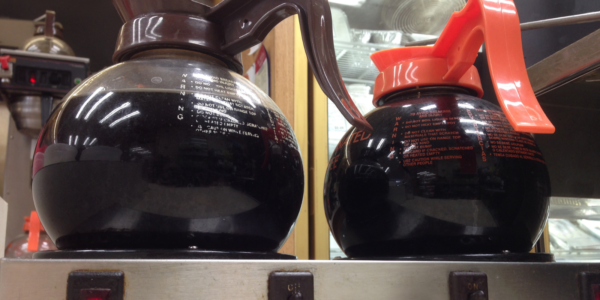
The camera that became the world’s first webcam was pointed at a coffee pot in a Cambridge computer lab in 1991, so researchers upstairs could see whether a trip down was worth making. The setup ran for nearly ten years, and its longest-serving pot sold for £3,350 when the lab moved
Every livestream, video call and doorbell camera on the planet has a common ancestor, and it spent its working life staring at a pot of filter coffee. In late 1991, a camera clamped to a retort stand (the metal pole…
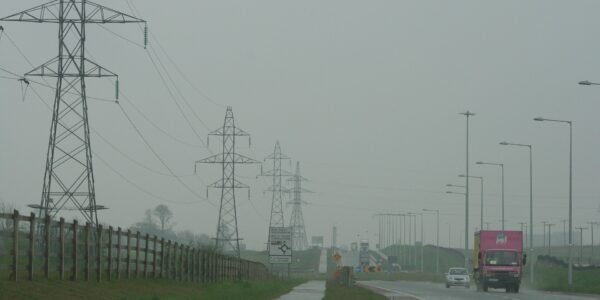
Data centres used 22 percent of Ireland’s metered electricity in 2024, up from 5 percent in 2015
In 2015, data centres drew 1,238 gigawatt hours from Ireland’s metered electricity network, or 5 percent of all metered consumption. In 2024 they drew 6,969 gigawatt hours, or 22 percent, according to the Central Statistics Office release published on 10…

A hand-blown carbon-filament lightbulb hanging in a California fire station has burned almost continuously since 1901. By 2016, it had already outlived three webcams set up to watch it.
Two pieces of technology, pointed at each other. One is a glass bulb, blown by hand and first lit in 1901. The other is a webcam, a modern webcam whose whole job is to keep an eye on that bulb….

A 16-year-old from Wrentham, Massachusetts, built a desktop plastic recycler that runs roughly 45% more efficiently than comparable home machines, and in 2025 the invention won him a $75,000 Regeneron Young Scientist Award
Benjamin Davis, a 16-year-old sophomore at Bishop Feehan High School in Attleboro, Massachusetts, spent much of the past two school years building a machine in his family’s home in Wrentham that turns plastic waste into fresh filament for 3D printers….

More than 100 used electric-vehicle battery packs have been wired into a 10-megawatt-hour bank at the Illinois plant that built them. They carry the factory through peak demand, giving the batteries a second life before recycling.
An electric-vehicle pack gets pulled from a car not when it stops working, but when it stops working well enough for driving. The range shrinks, fast-charging slows, and the pack no longer gives a driver what they expect. The cells…

At a solar site in Lancaster, California, more than 1,300 battery packs pulled out of retired Nissan and Honda cars sit wired together as 32 megawatt-hours of grid storage, the largest of a growing portfolio that includes sites in California and Texas
On a stretch of flat desert floor outside Lancaster, California, rows of white steel cabinets sit beside a solar array. Inside those cabinets are more than 1,300 lithium-ion battery packs, each one retired from a car whose battery had simply…
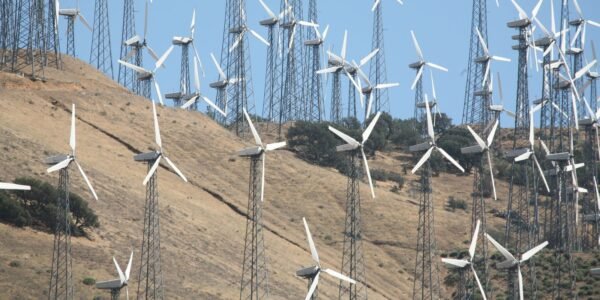
In 2008, a Rotterdam design firm turned 5 decommissioned wind turbine blades into towers, tunnels and other play structures for a 1,200-square-meter playground. The original blade shapes are still visible in the climbing towers overhead.
A wind turbine blade is one of the hardest things in the world to throw away. It is a long, hollow, tapering shell made of glass fibre set in hard resin, built to slice through the air for twenty years….
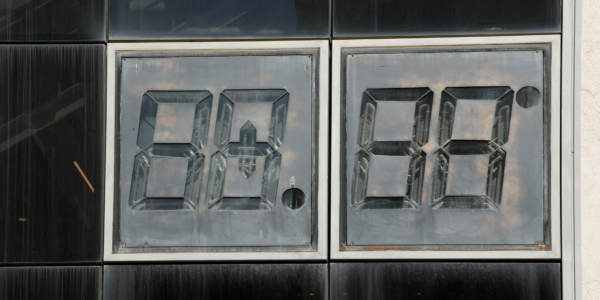
The world added a single extra second to official time in 2012 and parts of the internet broke — airline systems, Reddit and other services stumbled because some computers could not cope with a clock reaching 23:59:60
On the first morning of July 2012, check-in staff at Qantas and Virgin Australia put down their keyboards and started processing passengers by hand. Their reservation system had stopped working. So had Reddit, LinkedIn, Yelp and a decent slice of…

Engineers patented an artificial tooth that turns ordinary chewing into electricity — pressure from every bite flexes a tiny piezoelectric generator inside the tooth, harvesting jaw movement that could help keep small wearable electronics charged without plugging them in
Somewhere in the United States patent record sits a blueprint for a fake tooth with a power plant inside it. Two engineers at the headset maker Plantronics, Thomas Trumbull and Timothy Johnston, filed Jaw powered electric generator in May 2012…

A five-story school built in Shanghai in 1935 stood in the way of a new office complex, so engineers dug underneath it and fitted 198 mechanical supports; over 18 days they walked the 7,600-ton building 62 meters and rotated it 21 degrees onto its new site.
When an old building gets in the way of new development, its usual fate involves a wrecking ball so there’s something odd about what happened in Shanghai’s Huangpu district in the autumn of 2020. Instead of knocking a 7,600-ton school…