Roman marine concrete can become stronger through interactions with seawater, helping explain why ancient harbour structures survived conditions that steadily destroy modern materials
For most concrete, seawater is an enemy. Salt penetrates pores, chemical reactions disrupt the cement paste and chlorides can reach steel reinforcement, where corrosion expands and cracks the surrounding material. Yet cores drilled from ancient Roman breakwaters tell a very different story. In the right Roman mixture, contact with seawater did not merely fail to destroy the binder. It helped new cementing minerals grow inside it.
The result is concrete that has remained cohesive in Mediterranean harbours for roughly two millennia. Researchers have found crystals of phillipsite and aluminium-rich tobermorite forming through prolonged reactions among seawater, lime and volcanic material. These minerals can reinforce the mortar at vulnerable boundaries and make it more resistant to cracking.
That is the scientific basis for saying Roman marine concrete can become stronger with age. The word needs care, however. The research does not show that every Roman structure becomes steadily harder or that ancient concrete universally outperforms modern engineering concrete. It shows that some Roman harbour mixtures underwent beneficial mineral growth over very long periods, gaining chemical resilience while many conventional materials deteriorate in the same environment.
A concrete designed to react with the sea
Roman marine concrete was not a single secret recipe used everywhere in the empire. The best-studied examples contain hydrated lime mixed with volcanic ash, particularly pozzolana from the volcanic districts around the Bay of Naples, plus pieces of volcanic rock used as aggregate. Builders placed this mass in wooden forms, sometimes directly in the sea, where it set into enormous piers, moles and breakwaters.
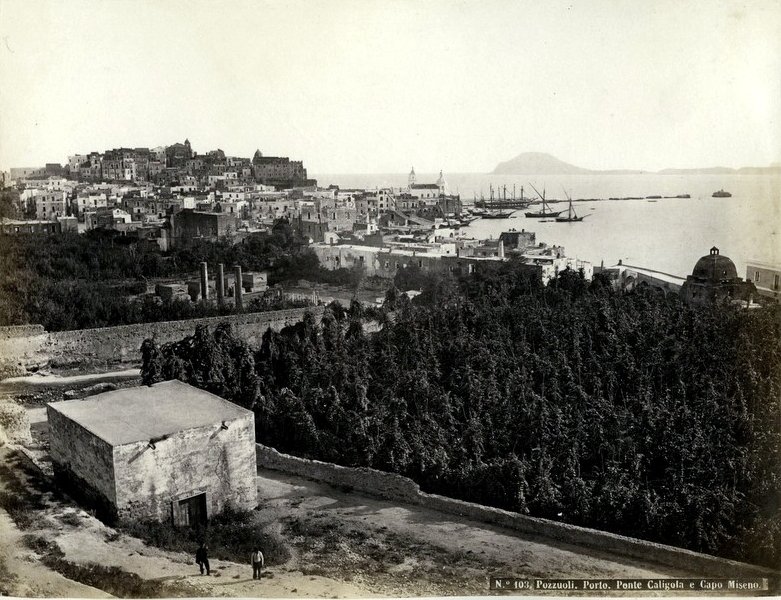
The Roman architect Vitruvius described volcanic powder from the region around Puteoli, now Pozzuoli, that could create solidity in structures built under water. Modern archaeology has tested the surviving material rather than relying only on his account. The Roman Maritime Concrete Study, known as ROMACONS, drilled large cores from harbour structures around the Mediterranean to compare their ingredients, construction and engineering properties.
Those cores reveal a material radically different from an inert pile of rocks glued together once and then sealed from its surroundings. Roman marine mortar remained open to chemical exchange. Seawater moved through cracks and pores, interacting with glassy volcanic ash and the products of the original lime reaction.
In a 2017 study in American Mineralogist, Marie Jackson and colleagues used X-ray microdiffraction, electron microscopy and spectroscopy to map minerals inside samples from Roman breakwaters. They found that low-temperature water-rock reactions produced phillipsite and aluminium-rich tobermorite within pumice particles, pores and the cementing matrix.
The sea helped grow a mineral framework
Tobermorite is a calcium silicate hydrate mineral. In the Roman samples, aluminium substituted into its structure, producing a stable form known as Al-tobermorite. The crystals did not simply arrive as ingredients in the original mix. Some formed in place as seawater-derived fluids dissolved components of volcanic glass and created new alkaline microenvironments.
Phillipsite, a zeolite mineral, also crystallised in voids. The reactions changed the concrete’s internal architecture over time. Instead of every microscopic crack being a one-way route toward failure, some openings provided space for new mineral growth. Jackson’s team described the process as authigenic mineral cycling, meaning minerals formed where the concrete sat through reactions with its environment.
Earlier work on a Roman breakwater from Pozzuoli had identified a calcium-aluminium-silicate-hydrate binder and Al-tobermorite that contributed to long-term cohesion. A Berkeley Engineering summary of that research explains that heat from the initial pozzolanic reaction encouraged early mineral formation, while the later study showed that crystallisation could continue through low-temperature seawater reactions.
This does not mean waves mechanically compacted the concrete into something harder. The strengthening effect was chemical and microstructural. New crystals could fill spaces, bridge interfaces and resist the propagation of fractures. A 2021 investigation combining four-dimensional tomography with mechanical tests found that Roman marine concrete showed ductile deformation and long-term physicochemical resilience, behaviour linked to its multiscale structure and unusual volcanic materials.
Modern concrete solves a different problem
The contrast with modern concrete is real but often oversimplified. Portland cement is manufactured to hydrate quickly, achieve predictable early strength and work with steel reinforcement. Steel supplies the tensile capacity that concrete lacks, making slender bridges, towers and other structures possible. Roman harbour works were generally massive, unreinforced conglomerates that carried loads in a different way.
In seawater, modern reinforced concrete faces a particular vulnerability. Chloride ions can eventually reach the steel and damage the passive layer that protects it from corrosion. Rust occupies more volume than the original metal, creating internal pressure that can crack and spall the covering concrete. Sulfates, magnesium salts, wetting cycles and physical abrasion can add further stresses.
The 2017 mineral study notes that modern maritime concrete commonly begins to decay after decades partly because of steel corrosion, while the ancient structures contained no steel. It also explains that ordinary Portland cement aims for relatively little long-term chemical evolution. Roman volcanic-ash concrete followed the opposite strategy: its open pores admitted seawater, but the available volcanic ingredients allowed some of that chemical exchange to create beneficial phases.
It would be wrong to conclude that all modern concrete is doomed or that engineers simply forgot the Roman formula. Modern mixtures can include supplementary cementitious materials, low-permeability designs, corrosion-resistant reinforcement and carefully selected aggregates. They must also meet strength, construction speed, safety and standardisation requirements that Roman builders never faced.
Survival is impressive, but not universal
Ancient harbour remains provide powerful evidence of durability, but they also carry survival bias. Researchers can core the structures that endured; failed structures are harder to study. Even famous Roman harbours did not all remain intact. Caesarea’s immense harbour, built with imported pozzolana, suffered collapse and submergence whose causes are still debated. A modern review describes the destruction history of Caesarea as controversial, with waves, foundation conditions, earthquakes, coastal change and construction differences all considered.
Concrete chemistry is therefore only one part of structural survival. A durable binder cannot guarantee that a harbour will withstand foundation movement, exceptional storms, seismic damage or poor construction. Nor did every Roman builder have identical ash. The volcanic materials from the Campi Flegrei region had a particularly useful chemistry that cannot be reproduced merely by mixing any ash with lime and seawater.
Researchers are nevertheless trying to translate the underlying principles. Long-lived binders that use less Portland cement could reduce maintenance, replacement and carbon emissions. Natural or manufactured pozzolans may help produce concretes with slower reactions, lower embodied emissions and improved resistance in marine settings. Recent experiments also investigate other Roman mechanisms, including lime-rich clasts that may help seal cracks, but that hot-mixing self-healing hypothesis comes mainly from land-based Roman concrete and should not be confused with the seawater-driven mineral cycling found in harbour cores.
The lesson is not that one ancient recipe should replace modern concrete. It is that durability can come from designing a material to evolve with its environment. Roman harbour builders combined lime and reactive volcanic rock in a way that let seawater participate in the concrete’s mineral life. In the most successful examples, the sea was not only the force the structure resisted. It became part of the process that helped the structure endure.