A 1948 IBM computer with no memory at all, fed by punchcards and programmed by physically rewiring its panels, was still doing the accounting at a Texas filtration company as recently as 2020
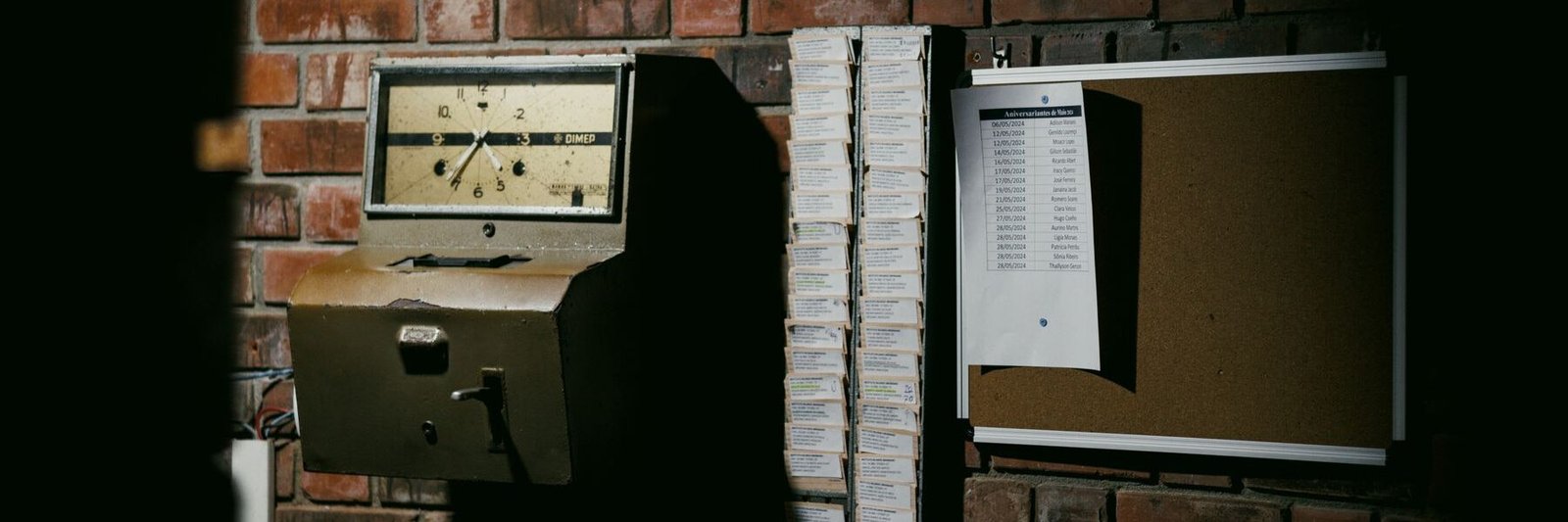
At Sparkler Filters in Conroe, Texas, accounting once meant carrying a deck of punched cards to an IBM 402, fitting the correct wired control panel into its side and listening as relays and mechanical counters turned the cards into a printed report.
The extraordinary part is not that this happened in the 1950s. A computer-history archive was still describing the filtration company as a user of the 402 in January 2020, more than seven decades after IBM introduced the model.
The broad story is true, but its most repeated version compresses several technical distinctions. The 402 model dates to 1948, although the exact manufacturing date of Sparkler’s particular unit is not established in the available records. It was an electromechanical accounting machine rather than a stored-program electronic computer. And “no memory at all” is accurate only in the modern, general-purpose sense: the machine had no program memory or addressable data store, but it did contain counters that held running totals.
The IBM 402 belonged to the era before software
IBM introduced the 402 Accounting Machine in July 1948. It descended from equipment built to process large collections of records one card at a time, a method whose commercial history stretched back to Herman Hollerith’s tabulating system for the 1890 United States census.
Each punched card acted as one record. Its 80 columns could hold fields such as an employee number, hours worked, a part number or a sales amount. Holes at defined positions represented the characters. As a card passed through the reader, brushes contacted a metal roller through the holes, closing electrical circuits and turning the pattern in the card into signals.
The 402 then routed those signals through relays and electromechanical components. It could compare fields, recognize changes between groups of cards, add numbers, print details and produce subtotals and final totals. Computer engineer Ken Shirriff’s technical examination of the closely related IBM 403, based partly on IBM manuals, describes the 402 as having 16 counters, multiple subtotal levels, conditional operations and controls for printing on business forms.
This was substantial automatic data processing. It was not electronic computing in the later sense. Shirriff notes that machines in this family used relays, mechanical counter wheels and card-reading brushes rather than vacuum-tube logic. They could process a repetitive accounting job quickly, but they did not load arbitrary instructions into memory and execute them in sequence.
A control panel was a physical program
The machine’s instructions existed as wiring on a removable plugboard, formally called a control panel. The panel presented a grid of labeled sockets. Connecting two sockets with a wire completed a circuit between functions inside the machine.
A programmer might connect particular card columns to a counter so the machine added those values. Other wires could route the same field to a position on the printer, detect when an account number changed, or trigger a subtotal. The arrangement of wires defined what happened to every card in the deck.
That is programming, although it is far removed from writing source code. The IBM 1401 restoration group’s archive of surviving plugboards includes wired 402 control panels that preserve those physical programs. The important feature of a removable panel was not that operators had to rebuild the machine before every run. They could wire panels in advance, store them on shelves and swap one complete “program” for another.
Sparkler Filters reportedly accumulated dozens of panels for different jobs. The physical control boards were therefore closer to a library of fixed applications than to a single panel being rebuilt each morning. A payroll job, an inventory report and a sales summary could each have its own board and card format.
“No memory” needs a narrow definition
The 402 had no random-access memory, magnetic storage or stored program. It could not retain a customer database internally after power was removed. Long-term records lived in decks of cards, printed reports and the company’s filing procedures. The plugboard preserved the processing logic, not the business data.
But the machine was not entirely without temporary state. Its mechanical counters had to retain sums while cards passed through. Group controls also had to detect when a value changed so the machine knew when to print a subtotal. Calling it literally memoryless erases the small but essential forms of working storage that made accounting possible.
The more precise description is that the 402 lacked general-purpose electronic memory and stored-program memory. Its state was distributed among counters, relays and the current card, while its durable inputs and outputs remained on paper.
The evidence from the Texas factory
In 2010, members of the Computer History Museum’s IBM 1401 restoration group traveled to Conroe after learning that Sparkler Filters still had an operational 402. Their visit report and photographs document the machine at work and describe it as performing business jobs for the company. The visitors hoped the 402 might eventually complete the museum’s working collection of punched-card equipment.
Three years later, the Houston Chronicle reported from Conroe that Sparkler was using the 402 with an IBM Model 129 keypunch for accounting and inventory. Lutricia Wood, the company’s head accountant and data-processing manager, had worked there since 1973. She said the card system was slowly being phased out in favor of personal computers, but she did not know exactly when the transition would end.
The strongest support for the title’s 2020 date is less direct. In a January 11, 2020 entry on the restoration group’s archive, volunteer Robert Garner discussed buying newly manufactured punched cards and referred to Sparkler Filters as still using an IBM 402. The note identifies the specialist who maintained the company’s card equipment and links back to the field report.
That entry supports the claim that the system remained in use as recently as 2020, but it is not a new on-site inspection or a formal statement from Sparkler. It does not say how frequently the 402 ran, which accounting tasks remained on it, or whether the machine continued beyond that year. Claims that it was certainly operating in 2022 circulate online without comparably clear documentation.
Why an obsolete system could survive
The usual explanation, “if it works, do not replace it,” is only part of the answer. The machine sat inside a larger system made of trained people, card layouts, forms, accounting routines, spare parts and prewired panels. Sparkler had spent decades making those pieces fit together.
Replacing the 402 was therefore not merely a hardware purchase. The company would have to translate its records and procedures, test new software, train staff and accept the risk of errors during the changeover. For a stable set of repetitive tasks, familiarity could outweigh speed or convenience.
The costs of staying also increased. By 2013, new punched cards were becoming difficult to obtain. The Chronicle reported that the company’s repairman, Duwayne Lafley, believed he might be the last punched-card technician still working. A failed relay, worn card feed or damaged printing mechanism could turn an ordinary repair into a search for knowledge and parts that the wider industry had abandoned.
The transition to stored-program business computers explains why almost every other installation disappeared. IBM’s own history of the IBM 1401 describes how the 1959 system replaced the plugboard with programs loaded from cards or magnetic tape. One computer could change jobs without a technician physically rebuilding its logic, and magnetic storage made large bodies of data easier to update and reuse.
A survivor of a different idea of computing
The 402’s longevity does not show that a 1948 machine could compete with modern accounting software. Its card reader was tied to fixed record layouts, its logic was constrained by the wiring panel, and its outputs were ink on paper. Even the work needed to prepare a deck remained part of the process.
What it shows is how durable a narrow information system can become. Sparkler Filters, which still manufactures industrial liquid-filtration equipment, had inherited not just a machine but a working institutional practice. As long as employees could make cards, select the right panel, maintain the mechanism and understand the reports, the system continued to perform the job for which it was built.
The IBM 402 stands near the boundary between office machinery and computing. Its data was made of holes, its programs were made of wires, and its temporary state lived in counters rather than silicon. That combination was already becoming old-fashioned when electronic business computers arrived. In one Texas accounting office, it remained useful into the age of cloud software.