The Dalles spent 13 months fighting to keep Google’s water use secret — then records showed the data center campus consumed roughly a third of the Oregon city’s supply
The most revealing fact about Google’s water use in The Dalles is not just the size of the number. It is how difficult that number was for the public to obtain.
The Oregon city did not spend two years fighting Google for access to the company’s records. According to reporting on the dispute, The Dalles sued The Oregonian to prevent the newspaper from obtaining information about Google’s water use. The legal fight lasted 13 months and ended in 2023, when the city released records showing that Google’s operations accounted for roughly a third of its water supply.
That distinction matters. The original controversy was not a small municipality forcing a reluctant technology company into transparency. It was a municipality attempting to keep information about one of its largest industrial users outside public view.
What the lawsuit was actually about
The dispute began after The Oregonian requested records showing how much municipal water Google’s data center campus was using. City officials treated the figures as protected trade-secret information and went to court to stop their release.
The case placed two legitimate interests in direct conflict. Google and the city had an interest in protecting operational information that might reveal details about the facility’s cooling efficiency. Residents and journalists had an interest in knowing how much of a shared public resource was being allocated to a single corporate customer.
After 13 months, the city settled the dispute, released historical records and agreed to disclose comparable information in the future. The resulting figure — roughly one-third of the city’s supply — transformed an abstract argument about industrial development into something residents could understand and debate.
Why Google built in The Dalles
Google arrived in The Dalles during the first major expansion of cloud computing. The location offered access to major fiber connections and abundant hydroelectric power from the Columbia River system. A 2006 WIRED report described a new 30-acre Google campus being constructed there as the base for an enormous server operation.
The company began operating in the city in 2006. What followed was a long-term relationship between a small Oregon community and one of the world’s largest technology companies, bringing investment and infrastructure alongside unusually concentrated demand for electricity and water.
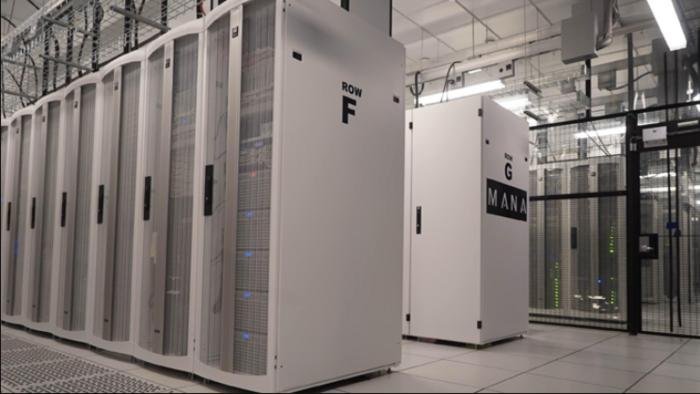
Data centers generate heat continuously. Their processors turn electrical energy into computation and, ultimately, waste heat that must be carried away. Some cooling systems use evaporation because water can remove heat efficiently. Operators therefore balance several competing pressures: water availability, electricity consumption, local weather, cost and the reliability required to keep servers running around the clock.

Why a third of a city’s supply matters
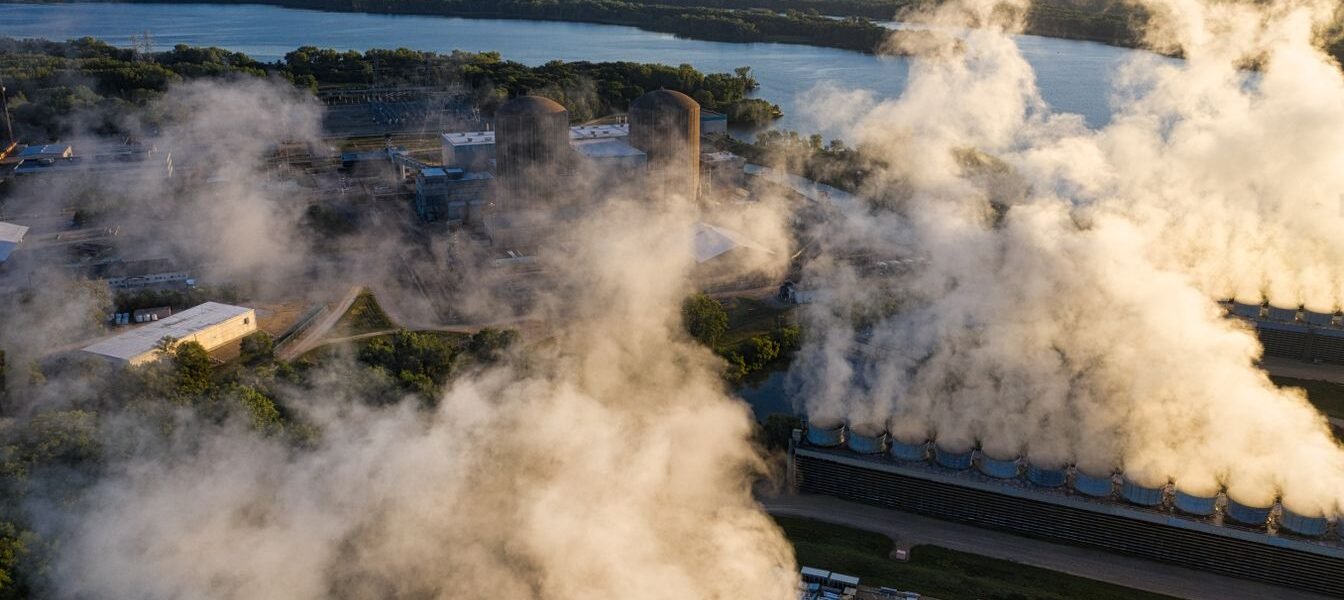
The Columbia is one of North America’s largest rivers, but the scale of the river is not the only relevant measurement. Municipal water systems operate through specific wells, treatment facilities, pipes, permits and seasonal capacity limits. An industrial facility can represent a negligible fraction of an entire river while remaining one of the dominant users of a city’s available supply.
This is why the consequences of data-center growth are intensely local. Recent research examining data-center demand on public water systems argues that water capacity can become a constraint on development and that the burden is concentrated in the communities hosting the facilities.
The amount withdrawn is also not the only question. Residents need to know whether water is consumed through evaporation or returned to the system, whether demand peaks during hot and dry periods, whether future expansion requires new infrastructure, and who will pay for that infrastructure.
None of those questions automatically means a data center should be rejected. They mean that approval decisions should be made with accurate figures rather than assurances that the impact is too commercially sensitive to disclose.

The precedent was transparency, not a courtroom victory over Google
The Dalles case did not establish that residents can always force a technology company to reveal every detail of its infrastructure. Nor did it prove that data centers are uniquely reckless users of water.
What it demonstrated was simpler: when a private company becomes a major user of a public water system, the volume it consumes can be a legitimate matter of public record. Commercial sensitivity does not automatically outweigh a community’s need to understand the limits of its own infrastructure.
Disclosure does not settle the argument. It makes an informed argument possible. Residents can compare the economic benefits of a new facility with the cost of additional treatment capacity. Officials can negotiate conservation measures or alternative cooling systems. Journalists can test corporate sustainability claims against local records.
The enduring story of The Dalles is therefore not that the town fought Google and won. It is that the city initially fought to keep the public from seeing the figures, then released records showing how heavily one corporate campus depended on the municipal supply.
The water-use number attracted national attention. But the route by which that number finally became public may be the more important part of the story.